

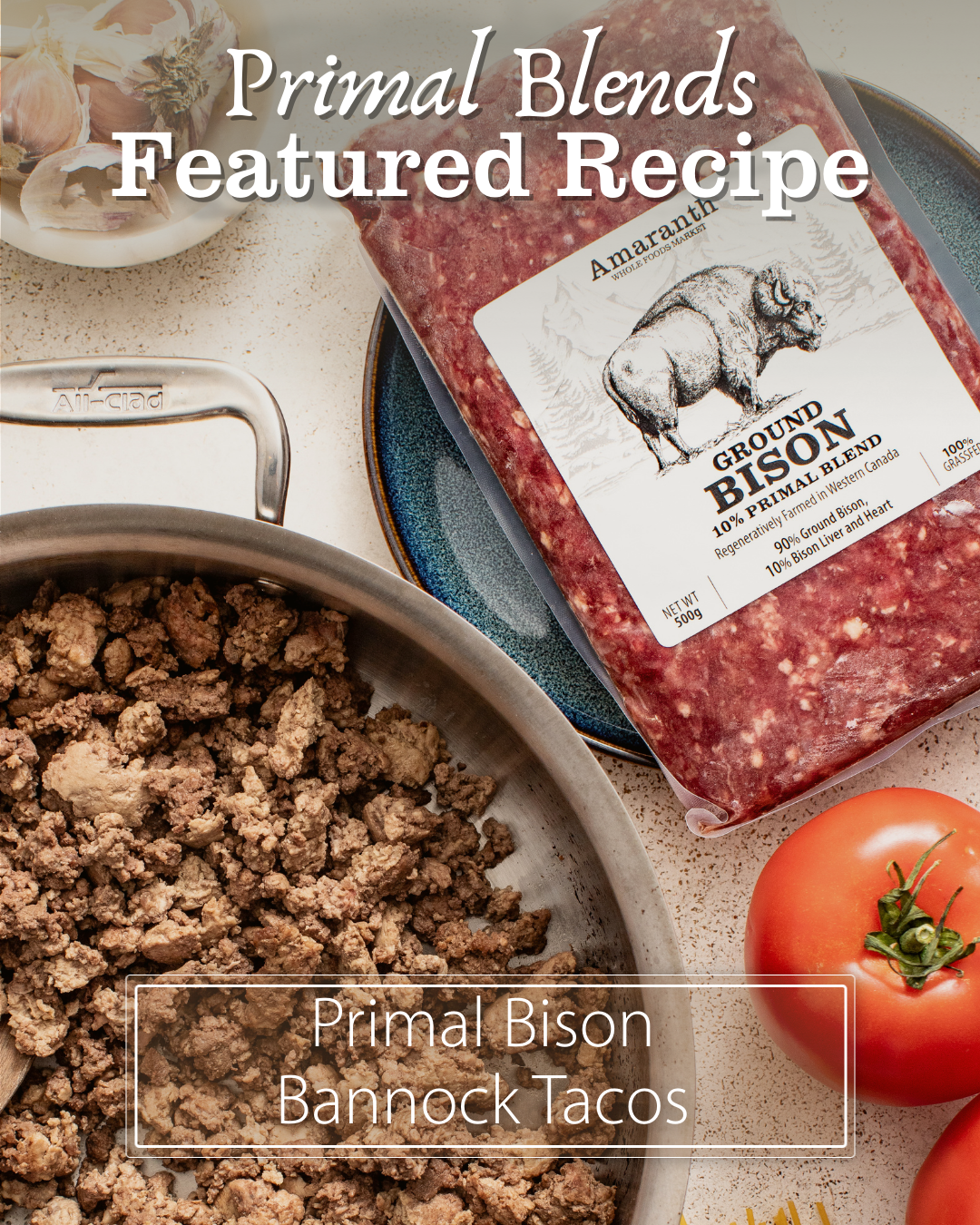
Amaranth Primal Bison Blend Bannock Tacos
Amaranth Primal Blends include offal like heart, liver and kidney, which add extra protein, nutrients and flavour! They can be substituted 1:1 in any of your favourite recipes for ground beef.
This recipe pays homage to the bison and the indigenous people who hunted them. “Bannock” is one of Canada’s most iconic foods, but you can rarely find it on a restaurant's menu. I always thought that bannock was a result of colonialism, but it existed long before Europeans settled this land. Bannock is a type of bread, baked or fried, that consists of fat, flour and baking powder. While food was scarce, bannock kept people full. Before wheat, Indigenous peoples made their flour from corn and nuts ground into a fine meal, or wild plants that contain corms, bulbs or tubers like daylilies. Bannock was cooked in hot sand, baked in a clay or rock oven or wrapped around a hard stick and slowly roasted over an open fire. Once settlers arrived, cast iron became the cooking standard.
“Indian tacos,” if you grew up near a reservation or indigenous people, is a dish you’ve probably had before. Growing up, I had it several times at school events and powwows. Typically topped with ground beef, chopped lettuce, shredded cheddar cheese, tomatoes and sour cream. Every 2nd Friday, we would eat a similar dish known as “taco in a bag,” which includes the same toppings but stuffed into a small Dorito bag. Bannock tacos aren’t like anything you will find in Mexico, but they are delicious in their own right.
My version of this dish highlights the Amaranth Foods Primal Bison Blend and High-Vibes Health Bison Tallow. My bannock is made with a mix of all-purpose flour and Canada’s original wheat, Red Fife from Scottish Mills. I like to eat my bannock tacos with Saskatoon berries, making them reminiscent of pemmican. Pickling them provides sweetness and acidity to balance the tacos. I also like to top mine with candied jalapenos, chopped tomatoes and sour cream. A local take on the classic from my childhood, this recipe uses all Amaranth ingredients for a delicious, quick and easy lunch or dinner perfect for game night or a kid’s sleepover. This recipe is nut-free and can be made dairy-free.
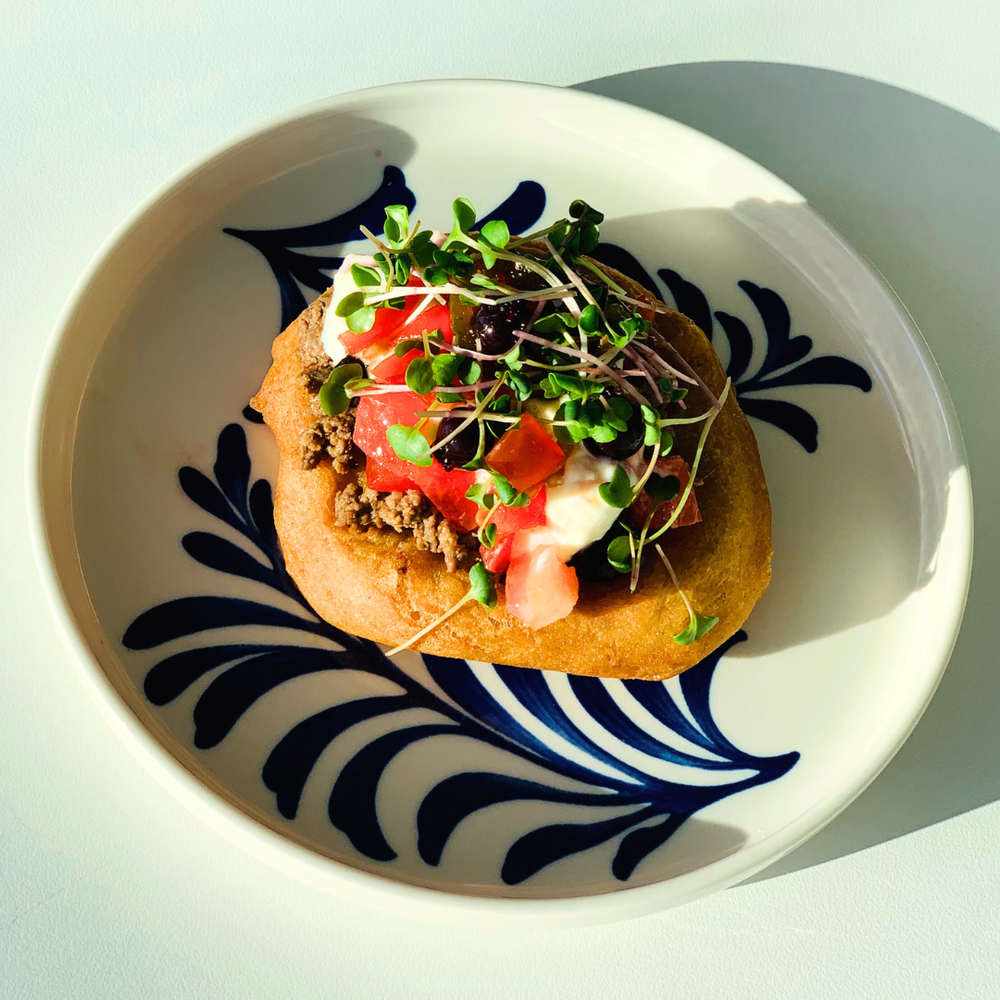
Primal Bison Bannock Tacos
Recipe from Tristan Guilbeault
Dietary restrictions: Nut-free, can be made dairy-free or lactose-free
Total Time: 1 hour 10 min | (Preparation): 10 minutes | (Resting): 30 minutes | (Cooking): 30 minutes
Yields: Feeds 4-5
Ingredients
Primal Bison Taco Mix
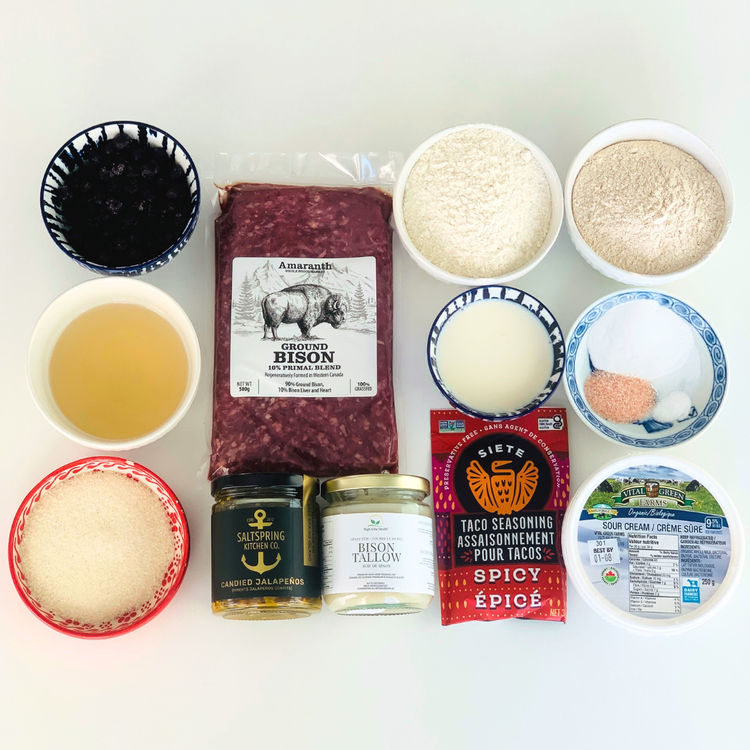
● 1 bag (500g) Amaranth Whole Foods Primal Bison Blend
● 1 tbsp High-Vibe Health Bison Tallow
● 1 tbsp Siete Taco Seasoning, Mild or Spicy
Fried Red Fife Bannock
● 2 cups (250g) Red Fife Flour (we recommend The Scottish Mills, Bulk Section)
● 1 1⁄2 cup All-purpose Flour plus more for dusting (we recommend Anita’s Organic)
● 1 cup Water, hot from the tap
● 1⁄2 cup Milk (we recommend Vital Greens Farm, Bles-World, Avalon, Rock-Ridge)
● 1 tablespoon baking powder (we recommend Bakers Supply House, Bob's Red Mill)
● 1 tablespoon High-Vibe Health Bison Tallow
● 1⁄8 tsp Baking Soda (we recommend Westpoint Naturals, Bob’s Red Mill)
● 1 tsp Salt
● Cooking Oil for frying (we recommend Chosen Foods Avocado Oil, Maison Orphee Grapeseed Oil, Spectrum Canola Oil, High-Vibe Health Beef or Bison Tallow)
Pickled Saskatoon Berries
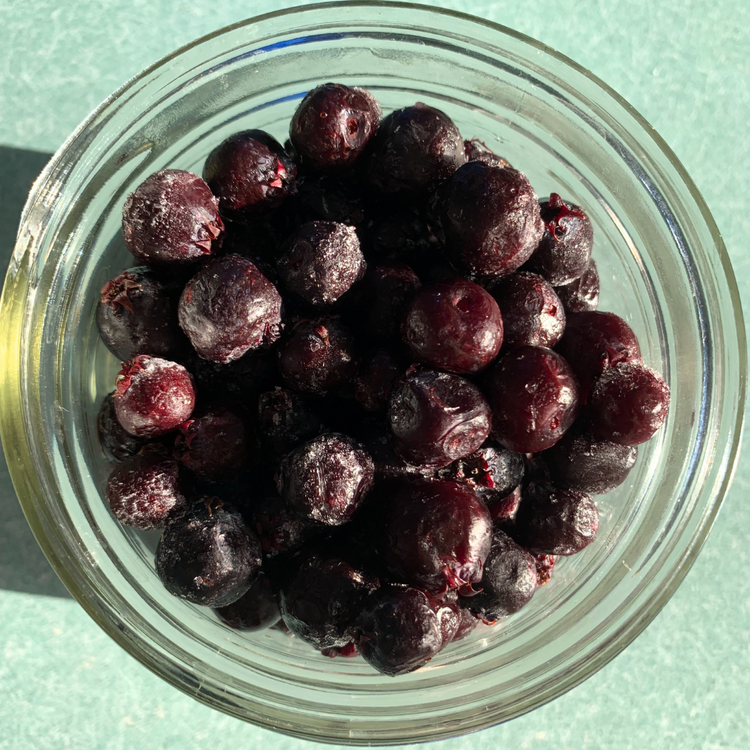
● 1⁄2 cup Prairie Berries Saskatoon Berries
● 1⁄2 cup White, White Wine, or Apple Cider Vinegar (we recommend Sunshine Farms, Maison Orphee, Filsingers, San Remo, Bragg Organic)
● 1⁄4 cup Water
● 1⁄3 cup Cane Sugar (we recommend Everland, Wholesome Organic, Bulk Section)
● 1⁄2 tsp Salt
Garnish
● 1 Tomato, chopped (Roma or On The Vine)
● Saltspring Kitchen Co. Candied Jalapeno
● Sour Cream (we recommend Avalon, Vital Greens Farm, Gay Lea for lactose-free)
Instructions - Red Fife Bannock
1. To make the bannock. Add all the dry ingredients to a medium-sized bowl and incorporate them together with a fork. Measure out a cup of the hottest water you can get from your tap, take the tablespoon of bison tallow and dissolve it in the water. Add the milk to the water, then slowly stream the liquid into the flour, mixing using a fork. Once all the liquid is incorporated, continue to mix the dough until it is kneadable. Add oil or tallow to your hands and knead. If it seems excessively wet, add a tablespoon of flour at a time until it is somewhat workable. Knead for 2 minutes, then cover with a small amount of tallow or oil. Cover with a tea towel or cling film and rest for 30 minutes on the counter.
2. Lightly dust your counter with flour, portion the dough about the size of your palms (smaller is better) and place on the counter. You should get around 10-12 balls of dough. Sprinkle more flour over the top of the balls and then flip, pressing the balls down into a circular shape with your palms. You want the dough to be around 1/3in thick or just over 1cm. If the dough is sticking to the counter, sprinkle over a little more flour.
3. Now decide whether to bake, pan-fry or shallow fry the bannock.
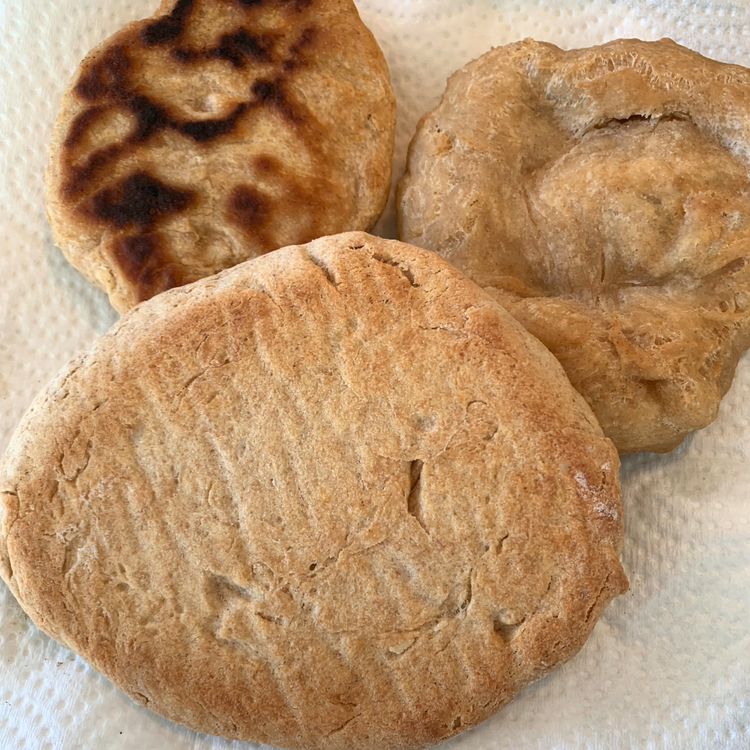
a) To bake, preheat the oven to 400f. Lightly oil a sheet pan and add parchment paper. Add the pieces of bannock and lightly brush with bison tallow or oil. Bake for 25 minutes.
b) To pan-fry, heat a cast iron or stainless steel pan over medium heat with a tablespoon of tallow or oil, once hot add the bannock 2-3 at a time, flip after 1 minute and add more oil if needed, flip once more, cook each for a total of 5 or so minutes or until both sides have good colour, if they are on the thicker side, place in a 300f degree oven while you pan-fry the rest. You can check if it is cooked by cutting one in half.
c) To shallow-fry, heat a cast-iron pot or medium-sized pot, add only about 1⁄2 in or so of oil. Once it heats to 350 degrees, add the bannock a couple of pieces at a time, flipping every 30 seconds or so until the bannock is nicely coloured and fully cooked, around 2-3 minutes per bannock.
Instructions - Taco Mix
1. Heat a medium-sized pan over medium-low heat. Add 1 tablespoon of bison tallow and add the ground bison, cook for 10-12 minutes. Gently break up with a spatula or wooden spoon and season with salt. Once half-cooked and broken up, add the Siete seasoning, and stir to combine. Once there is barely any pink left, turn off the heat. We do not want it to overcook!
Instructions - Pickled Saskatoon Berries
1. Add the vinegar, salt, sugar and water to a small saucepan. Heat over medium heat, stirring to dissolve the sugar. Place the frozen Saskatoon berries in a small jar or container and add the hot pickling liquid. Cover with a lid and then leave on the counter until it is room temp. Place in the fridge, the longer you wait before consuming,g the more flavourful the berries will be. I recommend enjoying 1-2 weeks after making.
Instructions - Bannock Tacos
1. If the bannocks are cold, pop them in the oven for a couple of minutes until they are warm. Spoon the ground bison over the bannock, add a healthy dollop of sour cream, a teaspoon of chopped tomatoes, a teaspoon of the pickled Saskatoon berries and a couple of pieces of candied jalapeno. Pick up and enjoy! Just make sure you have a napkin nearby, they can get messy! Enjoy these delicious Indigenous-style tacos made with Amaranth’s Primal Ground Bison and tallow!
SUBSTITUTIONS
To make this recipe dairy-free, substitute the milk in the bannock for water. Sour cream can be substituted with a lactose-free variety if necessary. The red fife flour may be substituted with whole wheat flour or all-purpose flour. If you do not have bison tallow, you can use beef tallow, melted butter, or any neutral oil like grapeseed, avocado or canola. For toppings, you can go wild; the one I grew up with always had sour cream, shredded cheddar cheese and chopped lettuce. Feel free to add other greens like scallions, cilantro or your favourite microgreens. You can add Mexican ingredients like El Herdez salsa rojo, verde, or fresh avocado. Canned items like corn or beans are also welcome here. Cheeses like feta or Monterey Jack would also be delicious. Use the toppings you and your family enjoy!
Tips
Depending on your household, you may have a preference for baked vs fried. These bannocks can be baked, pan-fried or shallow-fried. My personal favourite is the latter, with shallow-frying the dough is light and airy while still being crisp. Pan-frying makes for a very crispy outside and a light inside. Baking gives the dough the least amount of rise and the densest middle, and is the healthiest way to prepare them. When making the pickled Saskatoon berries, you may add pickling spices like black pepper, coriander seeds, star anise and juniper, or ingredients like orange peel or ginger. The pickled Saskatoon berry liquid may be used as a base for a seltzer. Add tonic water or club soda to a couple of tablespoons of the liquid and adjust sweetness as necessary.
Bannock Uses
Have leftover bannock? Here are a couple of delicious ways to use them up! Lightly warm up in the oven and top with your favourite jam for a quick and easy, delicious breakfast. Crofter’s Organic Strawberry fruit spread is my personal favourite. Add a couple of slices of Old School Snacks Brie cheese on top of the jam for a tasty snack. Bannock also works well as a substitute for bread in your favourite sandwiches. I like to make breakfast sandwiches using bannock, lightly pan-frying the bread and then adding mayo, a fried egg, back bacon and melted cheddar cheese. They also work well as burger buns!
STORAGE
The bannock can be left to cool and placed in the fridge in a plastic or paper bag; they can be rewarmed in the oven or a pan. They will last 5-6 days in the fridge. I have not personally tried freezing them, but I imagine it would work well. The bison taco filling will last up to 5 days in the fridge. Pickled Saskatoon berries can be stored in the fridge and will last up to 6 months with no issues.
Flavour and Nutritional Profile of Bison
A good cut of bison should not taste like beef. The flavour is slightly gamier and grassier, think of it compared to a commercial pig and a wild boar. If you were to give me samples of various game and ask me to guess which one was bison, it would be difficult to say, but side by side with beef, I enjoy the flavour of bison more. I find it to have a better mouth feel and richer flavour, although it can be more difficult to cook because of its leanness. Compared with beef, 4 ounces of beef contains nearly 80 more calories than bison (260 to 180), bison is higher in protein (24g to 22g), beef is higher in fat (14g to 8g), and bison is lower in saturated fat (3g to 6g). Bison contains excellent amounts of zinc and iron, as well as good levels of phosphorus, niacin, selenium, vitamins B6 and B12.
Bison In Alberta
Alberta was shaped by bison and the people who came before. The population of bison changed over time based on the Indigenous people hunting them. New hunting strategies were developed over time, like the Piskum and Buffalo jump. The Blackfoot even used controlled wildfires to regrowthe forest, indirectly creating more land for the buffalo to roam. The bison would follow the food and water, and indigenous tribes would follow. The nomadic lifestyle of the Blackfoot and other neighbouring tribes like the Siksika was necessary for their survival; if they could not find the herd, they would starve. When Europeans arrived in Alberta, the bison population was at its peak, an estimated 20-30 million. Butass horses and guns began to arrive in the province, and a high demand for furs, over a period of just 100 years, the population dropped to less than 300 individual bison, with a large majority of these animals residing south of the border in Montana and Colorado.
Reintroduction
Bison are largely protected now and are nearly impossible to find in the wild. Most are located in large parks or reserves and fenced in. Elk Island National Park near Edmonton has a healthy local population, most being descendants of the original plains bison native to Alberta. In 2016, 88 individuals were shipped to southern Alberta on the Blackfoot reserve, returning them to their ancestors' site. These bison are fenced in and looked after by the reserve; their herd is now almost over 800. Watertons National Park also recently reintroduced a small herd to their national park in 2021. Further south in Yellowstone National Park, the population was said to be as low as two dozen in 1902; now it is estimated to be over 4500.
Pemmican
Indigenous tribes were very smart in how they used the bison; nothing went to waste. The women processed the animals, boiling, roasting, smoking, and air-drying the meat. The sinew was used as string for bone and arrows, to tie teepees together, and in conjunction with the bones of the bison to create tools and weapons. The dried dung of the bison was used as fuel for fire; it would keep a low, consistent heat perfect for nighttime. The stomach and bladder were dried and used as storage. The hides were cured for blankets, robes, and teepee covers, while the boneswere boiled for broth and tallow. This tallow could be made into soap or used in combination with the air-dried meat of the bison to make pemmican. The dried meat is pounded until it is nothing but fibres and mixed in a high proportion (60/40 fat to meat) with the bison tallow. Often seasoned with dried wild berries like saskatoon, currant, chokecherries, and blueberries, pemmican was stored in large hide bags and could last months to years with no issues. High in protein and fat and easily transported, pemmican kept people alive during the winter. In the early frontier days, pemmican was widely traded.